Dead Stars, Perfect Time: How Pulsars Became the Universe's Most Reliable Clocks
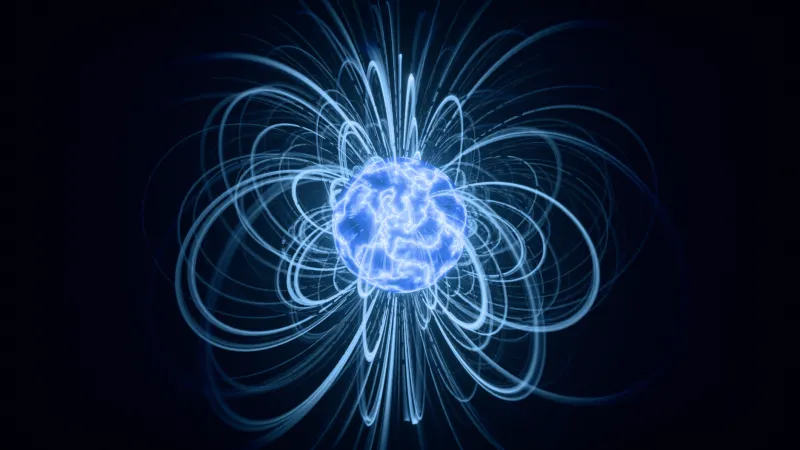
Imagine a clock so accurate that it loses less than a single second over millions of years. Now imagine that clock is actually the collapsed, spinning corpse of a dead star — roughly the size of a city but packed with more mass than the Sun — firing a beam of radio waves into space like a cosmic lighthouse. That's a pulsar, and honestly, it's one of the most mind-bending things in the entire universe.
Pulsars have quietly become some of the most important tools in modern astronomy. They help scientists study gravitational waves, probe the fabric of spacetime, and may even hold clues to the mysterious dark matter that makes up most of the universe's mass. All from a dead star. Let that sink in.
So What Exactly Is a Pulsar?
When a massive star exhausts its nuclear fuel, it collapses in a spectacular supernova explosion. What's left behind — if the star was the right size — is a neutron star: an incredibly dense object where protons and electrons get crushed together into neutrons. We're talking about a teaspoon of neutron star material weighing around a billion tons.
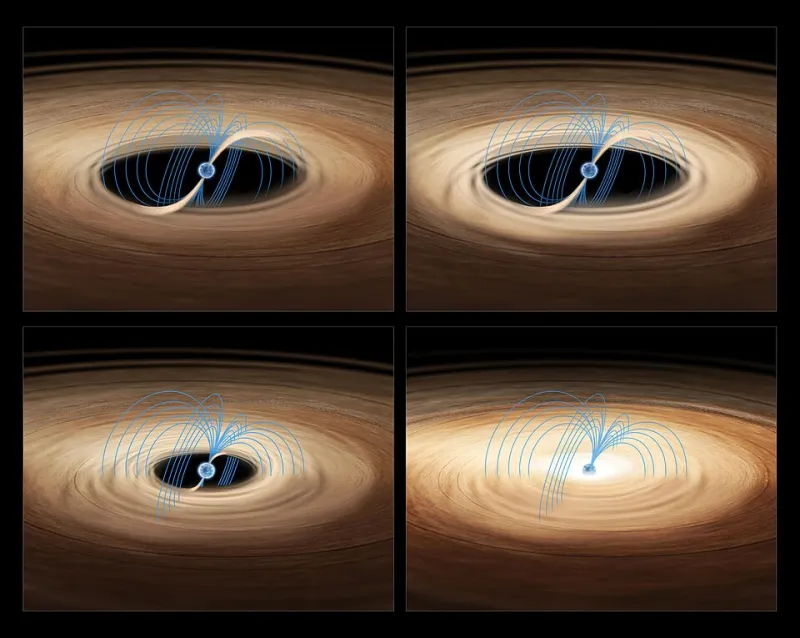
Some of these neutron stars spin. Fast. Really fast. And as they spin, they emit focused beams of electromagnetic radiation — usually radio waves — from their magnetic poles. If Earth happens to sit in the path of one of those sweeping beams, we detect a regular pulse every time the beam swings our way. Hence: pulsar.
The fastest pulsars, called millisecond pulsars, can rotate hundreds of times per second. Picture a basketball-sized city spinning 700 times a second, and you're in the right ballpark. These particular pulsars are thought to have been "spun up" by stealing mass from a companion star — a kind of cosmic recycling program that leaves behind one of the most stable rotating objects in the known universe.
Why Pulsars Out-Tick Atomic Clocks
Atomic clocks — the gold standard of human timekeeping — work by measuring the vibrations of atoms, typically cesium. They're extraordinarily precise, accurate to about one second every 300 million years. That's what powers GPS satellites, international time standards, and high-frequency trading systems.
Millisecond pulsars, though? They can match or even beat that precision. Their rotation rates are so stable that scientists can predict exactly when the next pulse will arrive — sometimes to within a microsecond — decades in advance. The reason comes down to physics: these objects are so dense and their angular momentum so enormous that almost nothing can disturb their spin. They're not affected by temperature, pressure, or the kinds of environmental noise that can subtly throw off human-built clocks.
In fact, astronomers have identified pulsars where the timing is stable enough to rival the best atomic clocks on Earth. And unlike our clocks, which require constant maintenance and calibration, pulsars just... keep going. No batteries required.
Listening to the Universe Ripple
Here's where things get really exciting. Because pulsars tick so reliably, any deviation in their timing — even a tiny one — is a signal that something unusual is happening between us and the pulsar. And one of the most fascinating things that can disturb pulsar timing? Gravitational waves.
Gravitational waves are ripples in spacetime itself, caused by massive events like colliding black holes or merging neutron stars. When a gravitational wave passes through our galaxy, it literally stretches and squeezes the space between Earth and distant pulsars — causing the pulses to arrive ever so slightly early or late.
This is the idea behind Pulsar Timing Arrays (PTAs). Scientists monitor dozens of millisecond pulsars spread across the galaxy simultaneously, looking for correlated timing deviations that would indicate a gravitational wave washing over us. It's like using the galaxy itself as a giant gravitational wave detector.
In 2023, researchers working with the North American Nanohertz Observatory for Gravitational Waves (NANOGrav), based partly out of institutions across the US, announced strong evidence for a gravitational wave background — a kind of low-frequency hum of gravitational waves rippling through the cosmos, likely generated by pairs of supermassive black holes orbiting each other across the universe. Pulsars made that discovery possible.
Hunting Dark Matter With a Dead Star
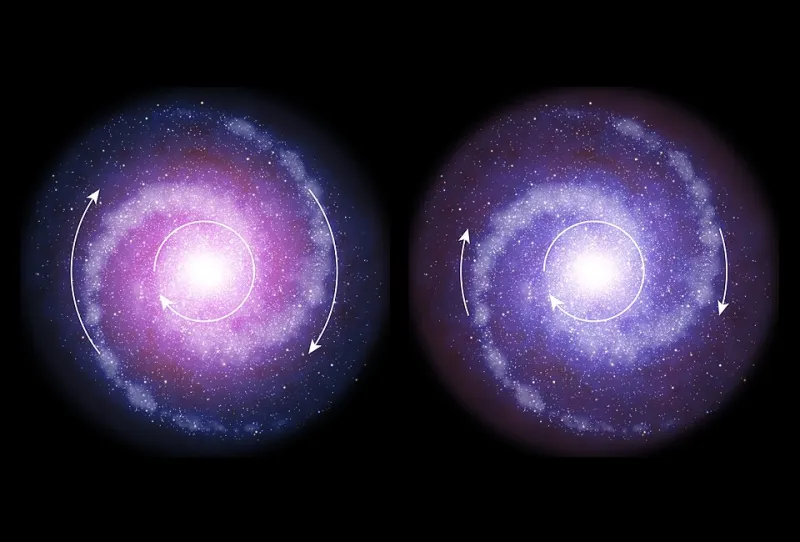
The plot thickens. Some physicists believe that pulsar timing arrays could also be used to detect dark matter — the invisible stuff that accounts for roughly 27% of the universe's total mass and energy, yet has never been directly observed.
One leading theory suggests that certain types of dark matter, like ultralight axions or dark matter clumps, could subtly affect the gravitational environment pulsars exist in, causing tiny but detectable shifts in their timing. By cross-referencing pulsar timing data with what we'd expect from different dark matter models, scientists hope to either confirm or rule out specific dark matter candidates.
It's an extraordinary idea: using the corpses of ancient stars to illuminate one of the biggest unsolved mysteries in all of physics. No particle accelerator required.
Could Pulsars Replace GPS?
Here's a fun one to chew on. GPS works by triangulating signals from satellites in Earth's orbit. It's reliable — most of the time — but it's also vulnerable. Solar flares, electronic jamming, and satellite failures can knock it out. In military and deep-space navigation contexts, that's a serious problem.
Enter X-ray pulsar navigation, or XNAV. NASA has been actively researching the idea of using pulsar signals — specifically X-ray pulses from a network of known pulsars — to navigate spacecraft anywhere in the solar system, or even beyond. Because pulsars are spread across the galaxy and tick with extraordinary precision, a spacecraft equipped with the right detector could triangulate its position in three-dimensional space without relying on any Earth-based infrastructure.
NASA's NICER instrument aboard the International Space Station already demonstrated this concept in 2018, successfully determining the ISS's position using pulsar timing data. It's early days, but the implications for deep-space exploration are huge.
The Cosmic Clocks We Didn't Build
There's something almost poetic about all of this. Humanity has spent centuries obsessing over timekeeping — from sundials to pendulum clocks to atomic oscillators — and it turns out the universe had already built something better, billions of years before we came along.
Pulsars didn't evolve to be useful to us. They're just the natural result of stellar death, angular momentum, and the laws of physics doing what they do. But in their spinning, relentless precision, they've handed astronomers one of the most powerful tools in the scientific toolkit.
Whether we're mapping gravitational waves, hunting dark matter, or navigating the solar system, these tiny, dense, furiously spinning objects are quietly reshaping what we know about the cosmos — one tick at a time.