When Stars Collide: The Explosive Secrets Hidden Inside Binary Star Crashes
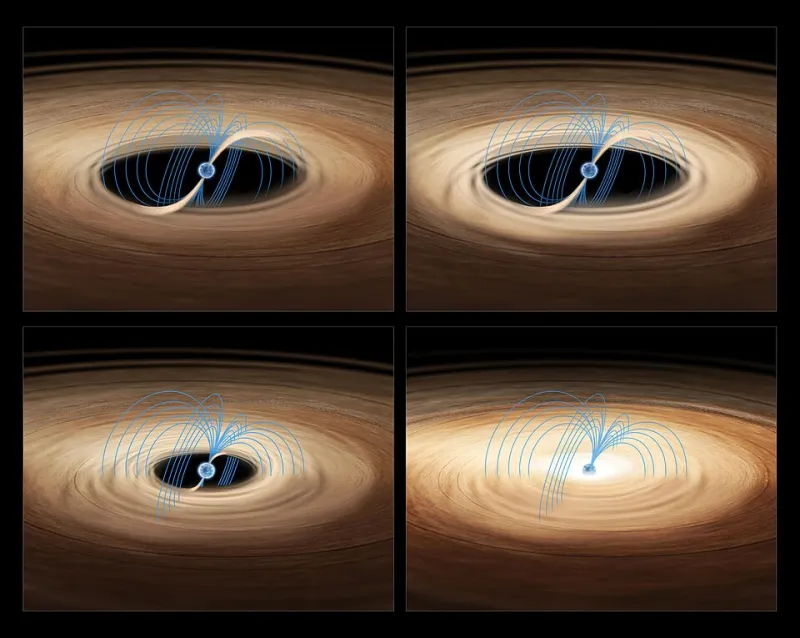
Photo: NASA Jet propulsion laboratory, Public domain, via Wikimedia Commons
Picture two stars — not a billion light-years apart, but uncomfortably close. Closer than the distance between Earth and the Sun. They've been orbiting each other for millions, maybe billions, of years, slowly bleeding mass back and forth like two exhausted wrestlers in a clinch. And then, one day, it all goes catastrophically wrong.
The result? Some of the most violent explosions the universe has ever produced.
Binary star systems — pairs of stars gravitationally bound to each other — are actually pretty common. Astronomers estimate that roughly half of all sun-like stars in the Milky Way have a companion. Most of them live out quiet, uneventful existences. But a meaningful fraction are set on a collision course, and what happens when they finally meet has reshaped our understanding of where the universe's heaviest elements actually come from.
The Slow-Motion Death Spiral
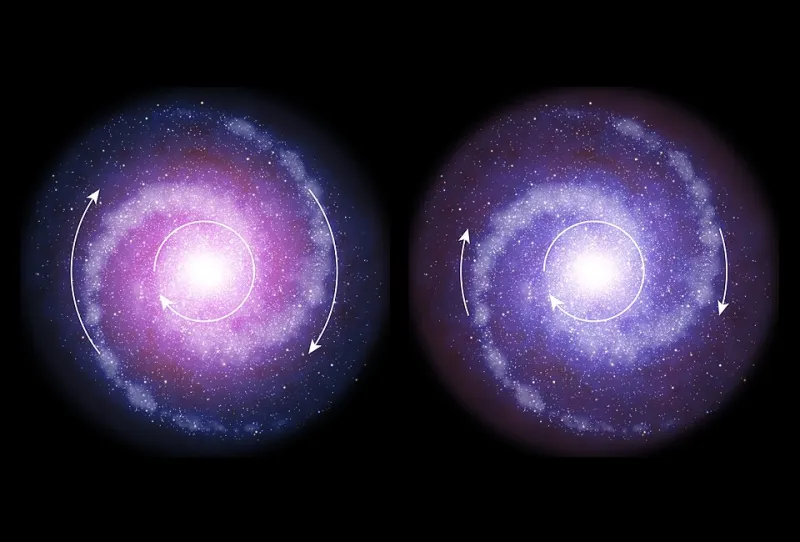
Here's where the spin comes in. As two stars in a binary system orbit each other, they gradually lose energy through a process called gravitational wave emission — the same ripples in spacetime that LIGO famously detected back in 2015. Over astronomical timescales, this energy loss causes their orbits to shrink. They spiral inward. They speed up. They spin up.
Think of it like a figure skater pulling their arms in — the tighter the system gets, the faster everything rotates. By the time two stellar remnants, say a pair of neutron stars or a white dwarf and its companion, are close enough to merge, they're whipping around each other at extraordinary velocities. The rotational signatures of these systems become a kind of fingerprint that astronomers can detect and study.
"The spin of the system tells you an enormous amount about what's going to happen next," explains the underlying logic that drives much of modern stellar astrophysics. Fast-spinning binaries are close to the edge. And when they go over that edge, the universe notices.
Two Flavors of Cosmic Catastrophe
Not all binary collisions are created equal. The type of explosion you get depends heavily on what kind of stars are involved.
Type Ia Supernovae happen when a white dwarf — the dense, Earth-sized remnant of a dead sun-like star — siphons enough mass from a companion that it exceeds a critical threshold called the Chandrasekhar limit. At about 1.4 times the mass of our Sun, the white dwarf can no longer support itself. Carbon fusion ignites in a runaway chain reaction, and the whole thing detonates in a thermonuclear explosion so consistent and so bright that astronomers use these blasts as "standard candles" to measure cosmic distances. In fact, observations of Type Ia supernovae in the late 1990s were what first revealed that the expansion of the universe is accelerating — one of the most shocking discoveries in modern science.
Kilonovae are a different beast entirely. These occur when two neutron stars — or a neutron star and a black hole — finally merge after their long inspiral. The collision is staggeringly energetic. It produces a short gamma-ray burst, one of the most powerful electromagnetic events in the known universe, and it also generates gravitational waves. But here's the part that really blew scientists' minds: kilonovae are gold factories.
Your Gold Was Forged in a Star Crash
For decades, astrophysicists debated where heavy elements like gold, platinum, and uranium actually came from. Standard stellar nucleosynthesis — the nuclear fusion that happens inside ordinary stars — can build elements up to iron. But iron is a dead end for fusion. Making anything heavier requires a different, more violent process.
The answer, it turns out, is neutron star mergers. When two neutron stars collide, the environment is so neutron-rich and so energetic that it drives a process called rapid neutron capture, or the r-process. Atomic nuclei get slammed with neutrons faster than they can decay, building up heavier and heavier elements in a matter of seconds. Gold. Platinum. Strontium. Uranium. All of it synthesized in the chaotic aftermath of a binary collision.
This wasn't just theoretical. In August 2017, astronomers detected both gravitational waves and light from a single kilonova event called GW170817, located about 130 million light-years away in the galaxy NGC 4993. Spectroscopic analysis of the explosion's afterglow confirmed the presence of strontium — direct observational proof that neutron star mergers produce heavy elements. The gold in your jewelry, the platinum in your catalytic converter, the uranium in nuclear reactors — it all traces back to events like this one.
Reading the Spin to Predict the Explosion
So how do astronomers actually study these systems before they blow? The answer lies in pulsar timing and gravitational wave astronomy.
Neutron stars often emit beams of radio waves as they spin — these are pulsars, and they're extraordinarily precise timekeepers. When a pulsar is in a binary system, astronomers can track tiny variations in its pulse timing to map out the orbital dynamics with remarkable precision. They can measure how fast the orbit is shrinking, calculate when the two stars will merge, and even infer the spins of both objects.
This is how astronomers first confirmed that gravitational waves were real, long before LIGO came online. In the 1970s, Russell Hulse and Joseph Taylor observed a binary pulsar system and watched its orbit decay at exactly the rate predicted by general relativity. They won the Nobel Prize in Physics for it in 1993.
Today, with LIGO and its European counterpart Virgo running regular observing campaigns, the catalog of detected binary mergers is growing. Each new event adds data points, refining models of how spin, mass, and orbital dynamics determine what kind of explosion a system will produce — and what elements it will scatter across the cosmos.
The Universe's Most Violent Assembly Line
There's something almost poetic about the whole picture. Stars form from clouds of hydrogen, spend millions or billions of years fusing lighter elements, die, and leave behind dense remnants. Those remnants sometimes find each other, lock into an orbital dance that lasts longer than human civilization has existed, and then finally crash together in an explosion that seeds the surrounding galaxy with the building blocks of planets, oceans, and life.
The gold in Fort Knox, the platinum in a wedding ring, the iridium that marks the asteroid impact layer in Earth's geological record — all of it passed through the heart of a binary collision at some point in the universe's 13.8-billion-year history.
Astronomers are getting better at catching these events in real time. The next generation of gravitational wave detectors, like the proposed Einstein Telescope in Europe and the space-based LISA mission, promise to detect binary inspirals before they merge, giving scientists advance warning of an incoming kilonova. That would be a first — watching a cosmic explosion coming before it happens.
In the meantime, every pulse from a distant binary pulsar is a tick of the clock. Somewhere out there, two stars are spinning closer together, faster and faster, building toward a detonation that will briefly outshine an entire galaxy. And written in the light of that explosion will be the recipe for the next generation of worlds.