Written in the Stars: How Ancient Navigators Crossed the World Without a Single Gadget
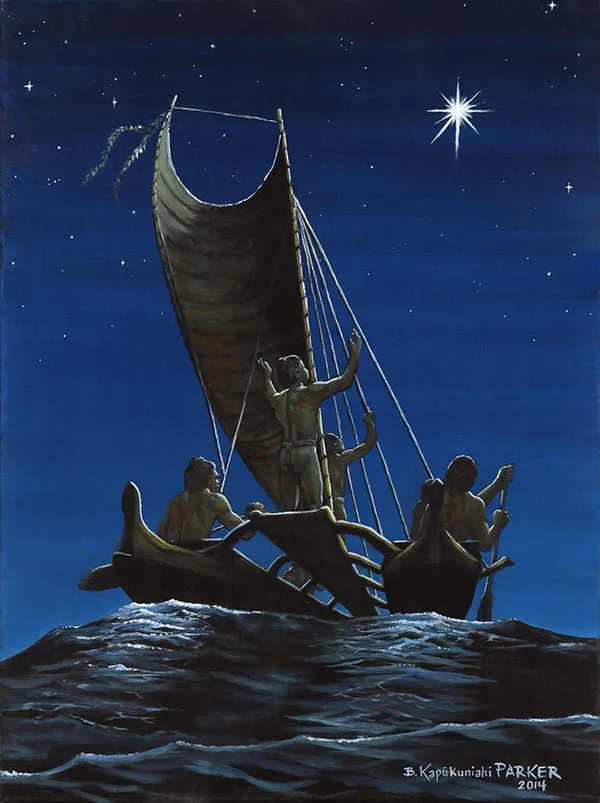
Photo: ancient Polynesian navigator stars night sky ocean canoe, via i.pinimg.com
Imagine standing on a wooden canoe somewhere in the middle of the Pacific Ocean. No land in sight. No instruments. No signal bars. Just you, the wind, the waves — and a sky absolutely packed with stars. For most of us, that scenario sounds terrifying. For ancient Polynesian navigators, it was just Tuesday.
Long before satellites started telling us to "turn left in 300 feet," humans were crisscrossing oceans, deserts, and continents using nothing but the cosmos overhead. And honestly? Their methods were so sophisticated that modern scientists and sailors are still studying them.
The Sky as a Living Map
The key insight ancient navigators figured out — one that took real intellectual firepower — is that the stars aren't random. They rise and set at predictable points on the horizon, they move in consistent arcs, and their positions shift with the seasons in patterns you can actually memorize. The night sky, in other words, behaves like a clock, a compass, and a map all rolled into one.
Polynesian wayfinders, arguably the most impressive open-ocean navigators in human history, developed a system called the "star compass." Rather than relying on a single north star (though they knew Polaris, or its Southern Hemisphere equivalents), they memorized the rising and setting points of hundreds of individual stars. Each star rose at a specific spot on the horizon and set at another. If you knew your destination lay roughly in the direction where Arcturus rises, you simply kept that star over your bow as you sailed.
This wasn't guesswork. It was a deeply technical, carefully transmitted body of knowledge passed down through generations of navigators, or wayfinders, in the Hawaiian and broader Polynesian traditions. The 1976 voyage of the Hōkūleʻa — a reconstructed traditional Hawaiian double-hulled canoe that sailed from Hawaii to Tahiti using only traditional navigation — proved these methods weren't just folklore. They were astonishingly accurate.
Polaris: Humanity's Original North Star
In the Northern Hemisphere, one star made celestial navigation dramatically simpler: Polaris, the North Star. Because Earth's axis points almost directly at it, Polaris barely moves while every other star wheels around it through the night. Ancient Greek sailors, Norse explorers, and Native American peoples all recognized this fixed point and used it to determine which way was north.
But here's something even cooler — the altitude of Polaris above the horizon tells you your latitude. The higher it sits in the sky, the farther north you are. Medieval Arab astronomers and navigators used an instrument called a kamal — essentially a small wooden card on a string — to measure Polaris's angle precisely. By comparing that measurement to known values for specific ports and destinations, they could calculate their latitude with remarkable accuracy.
Arabian traders crossing the Indian Ocean and the Sahara relied heavily on this kind of celestial measurement. They catalogued stars, named constellations, and built entire navigational traditions around reading the sky. In fact, many of the star names we still use today — Aldebaran, Betelgeuse, Rigel, Altair — come directly from Arabic, a testament to just how seriously these cultures took their astronomy.
Constellations as Cosmic Signposts
Constellations were never just pretty pictures. For ancient navigators, they were functional landmarks. Orion, for example, is useful because his belt — those three bright stars in a row — rises almost exactly due east and sets almost exactly due west, regardless of where you are on Earth. That made Orion's belt a reliable east-west indicator for cultures from Mesopotamia to Mesoamerica.
The Big Dipper, which Americans know well, was used by enslaved people in the antebellum South to navigate northward toward freedom — following the "Drinking Gourd" to Polaris and liberty. That's not mythology. That's practical celestial navigation woven into the fabric of American history.
Viking sailors used a different trick. They navigated by the sun during daylight hours with an instrument called a solar compass, and some historians believe they used "sunstones" — a type of crystal called Iceland spar that can detect polarized light — to locate the sun even through overcast skies. On clear nights, they followed familiar star patterns across the North Atlantic, reaching Iceland, Greenland, and almost certainly North America centuries before Columbus.
The Science Underneath the Magic
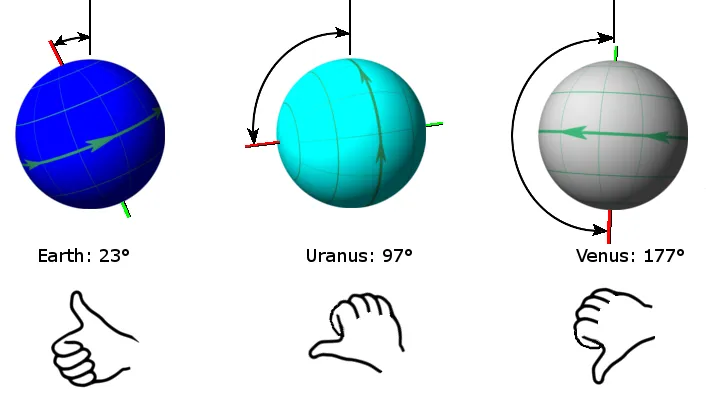
What made all of these techniques work is the same celestial mechanics that modern astronomers study today. Earth rotates on its axis once every 24 hours, which is why stars appear to move across the sky each night. Earth also orbits the sun over the course of a year, which is why different constellations are visible in different seasons. And Earth's axis is tilted at about 23.5 degrees, which drives everything from the seasons to the slowly shifting position of the celestial poles over thousands of years.
Ancient navigators didn't have equations to describe all this. But they had something equally powerful: generations of careful observation. They noticed the patterns, tested them on real voyages, refined their techniques, and built navigational traditions that worked reliably across thousands of miles of open water and empty desert.
Why This Still Matters Today
You might be wondering what any of this has to do with modern space exploration. Quite a lot, actually.
Celestial navigation is still taught to US Navy officers specifically because it's a backup system that can't be hacked, jammed, or knocked out by a solar flare. When GPS goes down — and it can — knowing how to shoot a star with a sextant is the difference between being lost and being found.
In space exploration, the same principle applies on a grander scale. NASA's New Horizons spacecraft, which flew past Pluto in 2015, used a technique called optical navigation — essentially taking pictures of stars and known objects to pinpoint its location in the solar system. The Voyager probes, now in interstellar space, were tracked using similar celestial reference points. Future missions to Mars and beyond will rely on autonomous celestial navigation, where spacecraft essentially do what Polynesian wayfinders did: read the positions of known stars to figure out exactly where they are.
There's even serious research into using pulsars — rapidly spinning neutron stars that emit radiation with extraordinary regularity — as a kind of cosmic GPS for deep space travel. The universe, it turns out, is full of natural navigation beacons if you know how to read them.
Looking Up, Then and Now
There's something genuinely moving about the fact that the same intellectual impulse — look up, find the patterns, use them to find your way — connects an ancient Polynesian navigator on a hand-built canoe with a NASA engineer plotting a trajectory to the outer solar system. The tools are wildly different. The principle is identical.
The stars were humanity's first technology. They helped us spread across the planet, build civilizations, and develop the scientific thinking that eventually got us to the moon. Every time you use a star map app or catch a glimpse of Orion on a winter night, you're participating in a tradition that's tens of thousands of years old.
Not bad for just looking up.