Planet Hunters on a Roll: How We're Finding New Worlds Faster Than Ever
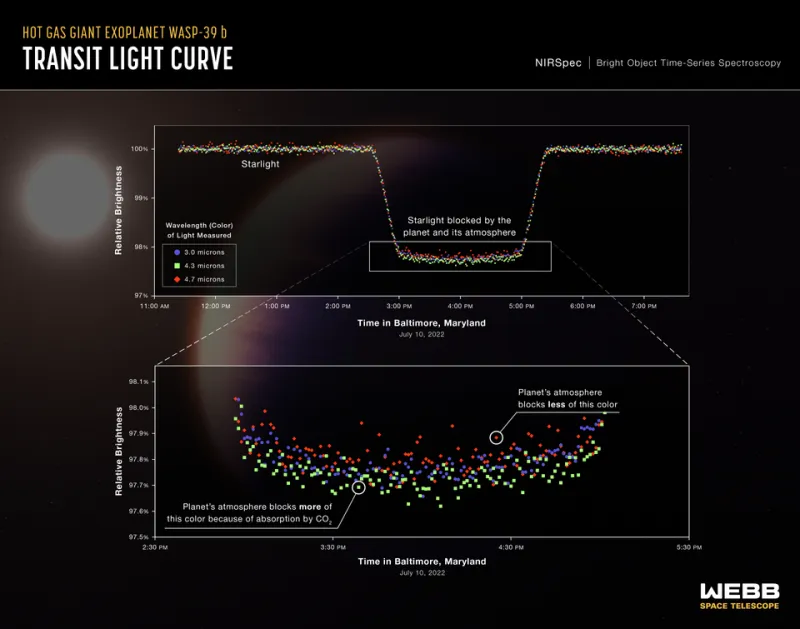
Photo: NASA's James Webb Space Telescope, CC BY 2.0, via Wikimedia Commons
Not long ago, the question "are there other planets out there?" was more philosophy than science. We suspected the answer was yes, but actually proving it? That was another matter entirely. Then, in 1992, astronomers confirmed the first planets orbiting a pulsar — a dead, spinning star — and the floodgates cracked open. By 1995, the first planet around a Sun-like star was confirmed. And from there? Things got wild.
We've now cataloged more than 5,500 confirmed exoplanets, with thousands more candidates waiting in line. What changed? Mostly, our tools — and our cleverness in using them.
The Transit Method: Catching a Shadow from Trillions of Miles Away
Imagine watching a firefly blink next to a spotlight from across a football field. That's roughly the challenge of spotting an exoplanet next to its blazing host star. So instead of looking at the planet directly, astronomers got sneaky: they watch the star.
When a planet passes in front of its star — what scientists call a transit — it blocks a tiny fraction of the starlight reaching us. We're talking a dip of maybe 1% or less in brightness. It's subtle, but it's measurable. And crucially, it's repeatable. Every time the planet completes an orbit and crosses in front of the star again, that same dip shows up. Regular, rhythmic, unmistakable.
This is the transit method, and it's been the engine behind the biggest exoplanet hauls in history. NASA's Kepler Space Telescope, launched in 2009, stared at a patch of sky containing about 150,000 stars for nearly a decade. The result? More than 2,600 confirmed exoplanets — a staggering achievement that fundamentally changed how we think about the galaxy.
But Kepler's successor is where things really kicked into high gear.
TESS: The Sky-Scanning Machine That Never Sleeps
Launched in 2018, the Transiting Exoplanet Survey Satellite — TESS, for short — took the transit method and scaled it up dramatically. Rather than staring at one patch of sky, TESS scans almost the entire sky, rotating through different sectors every 27 days. It's like going from a telescope pointed at one neighborhood to a security camera watching a whole city.
Because TESS focuses on stars that are closer and brighter than Kepler's targets, the planets it finds are much easier for other telescopes to follow up on and study in detail. That's a game-changer. Finding a planet is exciting. Understanding what it's made of, what its atmosphere looks like, whether it might harbor liquid water — that's the real prize.
As of now, TESS has racked up hundreds of confirmed exoplanets and is still going. The mission keeps churning out candidates faster than ground-based observatories can fully confirm them, which is a genuinely wonderful problem to have.
Radial Velocity: Listening to the Wobble
The transit method has a limitation: it only works when a planet's orbit is lined up just right so it crosses in front of its star from our point of view. Most planetary systems aren't oriented that conveniently. Enter the radial velocity technique, which takes a completely different approach.
Here's the thing about gravity — it's a two-way street. A planet doesn't just orbit its star; the star also gets tugged slightly by the planet's gravity. It's a tiny wobble, but it's there. And when a star wobbles toward us, its light gets compressed into slightly shorter (bluer) wavelengths. When it wobbles away, the light stretches into slightly longer (redder) wavelengths. This is the Doppler effect, the same reason an ambulance siren sounds higher-pitched as it approaches and lower as it passes.
By measuring these minuscule shifts in starlight — we're talking changes of just a few meters per second, about the speed of a leisurely jog — astronomers can infer the presence of a planet, estimate its mass, and calculate how long its year is. The radial velocity method was how that first planet around a Sun-like star was confirmed back in 1995, and it remains one of the most powerful tools in the exoplanet hunter's kit.
Used together, the transit method and radial velocity are a formidable duo. Transits reveal a planet's size; radial velocity reveals its mass. Combine those two numbers, and you can calculate density — which tells you whether you're looking at a rocky world like Earth or a puffy gas giant like Jupiter.
The Numbers Are Accelerating — And That's Not a Coincidence
Here's something that should genuinely impress you: it took humanity until 2014 to confirm the first 1,000 exoplanets. We hit 5,000 in 2022. That's not just growth — that's acceleration. The discovery rate is speeding up, driven by better instruments, smarter algorithms, and a global network of astronomers collaborating across continents.
Machine learning has quietly become one of the unsung heroes of exoplanet science. Telescopes like TESS generate enormous amounts of data — far more than human researchers could ever comb through manually. AI systems trained to recognize the characteristic dip of a planetary transit can scan thousands of light curves in the time it would take a person to analyze a handful. False positives still happen, but the pipeline from "candidate" to "confirmed planet" is getting faster and more reliable every year.
What Are We Actually Finding Out There?
The sheer variety of exoplanets has been one of the biggest surprises of this whole enterprise. Before we started finding them, most astronomers assumed other solar systems would look roughly like ours — rocky planets close in, gas giants farther out. Reality had other ideas.
We've found "hot Jupiters" — gas giants orbiting so close to their stars that a year lasts just a few Earth days. We've found "super-Earths," planets bigger than our own but smaller than Neptune, a size class that doesn't even exist in our solar system. We've found planets orbiting two stars simultaneously, like something out of Star Wars. We've found worlds where it probably rains iron.
And yes — we've found planets in the so-called habitable zone, that Goldilocks region where temperatures might allow liquid water to exist on the surface. Several are rocky. A few are tantalizingly Earth-sized. None have yet revealed signs of life, but the search is just getting started.
What's Coming Next
The James Webb Space Telescope is already beginning to sniff the atmospheres of some of these worlds, hunting for chemical signatures that might hint at biological processes. Future missions like the Nancy Grace Roman Space Telescope and the European PLATO mission promise to expand the catalog even further.
And on the ground, next-generation instruments are being built with the explicit goal of detecting Earth-sized planets in Earth-like orbits around Sun-like stars — the configuration most likely to support life as we know it.
The carousel is spinning faster than ever. And with each new world that pops into our catalog, the odds that we're alone in this universe get a little harder to defend.