Nothing Is Ever Really Gone: The Surprising Second Life of Matter Inside Black Holes
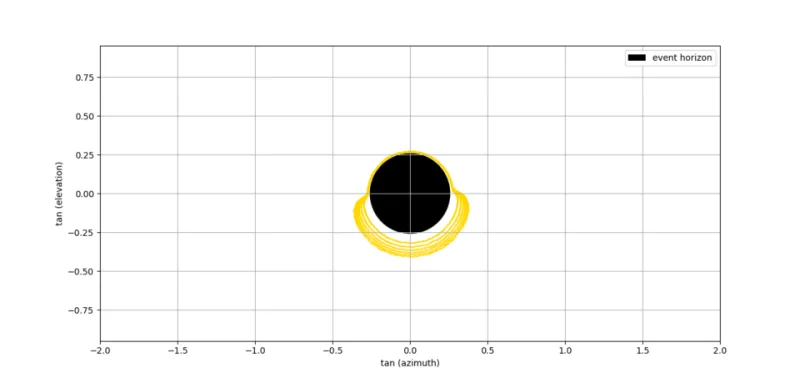
Photo: Cornelius Fyla, CC BY-SA 4.0, via Wikimedia Commons
Picture the biggest, baddest trash compactor in existence — one so powerful that not even light can escape its grip. That's the image most of us carry around when we think about black holes. Pop culture loves painting them as cosmic villains, the universe's version of a drain that swallows everything and returns nothing.
But here's the twist: some of the brightest minds in theoretical physics think that picture is almost completely wrong.
Far from being dead ends, black holes may actually function as something closer to the universe's most extreme recycling centers — processing matter and energy in ways we're only beginning to understand. Strap in, because this one gets wild.
The Event Horizon Isn't the End of the Story
Let's start with the basics. A black hole forms when a massive star collapses under its own gravity, crushing its core into an impossibly dense point called a singularity. Surrounding that singularity is the event horizon — the invisible boundary beyond which escape becomes physically impossible.
For decades, the assumption was simple: anything crossing that boundary is gone. Full stop. Matter, light, information — all of it crushed into oblivion.
But in the 1970s, British physicist Stephen Hawking threw a wrench into that tidy narrative. Using a blend of quantum mechanics and general relativity, he predicted that black holes aren't perfectly silent. They actually emit radiation — what we now call Hawking radiation — and over astronomical timescales, this emission slowly causes them to lose mass and eventually evaporate entirely.
Suddenly, the drain had a leak.
Quantum Weirdness at the Edge of Everything
So how does a black hole — something defined by its ability to trap everything — manage to radiate energy outward? The answer lives in the strange world of quantum mechanics.
Empty space isn't actually empty. At the quantum level, pairs of virtual particles are constantly popping into existence and annihilating each other almost instantly. It's a weird but well-documented phenomenon. Near a black hole's event horizon, though, something unusual can happen: one particle from a pair gets pulled across the boundary while the other escapes into space.
The escaping particle carries away real energy — energy that ultimately comes from the black hole's own mass. Do this enough times over enough time, and the black hole gradually shrinks. Given long enough — we're talking timescales that make the current age of the universe look like a coffee break — even a supermassive black hole would theoretically radiate itself down to nothing.
That's remarkable on its own. But it raises an even thornier question.
The Information Paradox: Physics' Most Stubborn Headache
Here's where things get philosophically uncomfortable. One of the bedrock principles of quantum mechanics is that information is never truly destroyed. Every particle carries a kind of encoded history — its quantum state — and physics insists that history can always, at least in theory, be reconstructed.
But if a black hole swallows a star, a planet, or your old college textbooks, and then slowly evaporates via Hawking radiation, what happens to all that encoded information? Does it just... vanish?
That's the black hole information paradox, and it's been driving physicists absolutely nuts for about fifty years. If information is destroyed, quantum mechanics breaks down. If it isn't, we need to explain how it escapes a black hole — which seems to violate general relativity.
Neither option is comfortable.
Recent work, including research connected to something called the "island formula," suggests that information might actually be encoded in the Hawking radiation itself — scrambled almost beyond recognition, but technically still present. Think of it less like shredding a document and more like feeding it through the world's most chaotic blender. The paper isn't gone; it's just been transformed into something almost impossibly difficult to read.
If that's true, black holes aren't destroying information — they're transforming it.
Galactic Architects in Disguise
Zoom out from the quantum scale, and black holes start looking even more essential to the universe's big picture.
Supermassive black holes — the kind lurking at the centers of most large galaxies, including our own Milky Way — don't just sit there being menacing. They actively shape their cosmic neighborhoods. As they consume surrounding gas and dust, they release enormous jets of energy that can stretch for thousands of light-years, heating up the surrounding medium and influencing whether new stars form nearby.
In a very real sense, these giants regulate star formation across entire galaxies. Too much star formation happening too fast? The black hole's energy output pumps the brakes. It's a feedback loop that helps maintain a kind of cosmic balance — less like a destroyer, more like a thermostat.
Astronomers have even observed black holes actively triggering star formation by compressing gas clouds with their powerful jets. The same object that consumes matter on one end is sparking new stellar life on the other.
What Goes In Must Come Out — Eventually
Pull all of this together, and a very different portrait of black holes starts to emerge.
Yes, they consume. Yes, crossing the event horizon is a one-way trip for anything made of ordinary matter. But the energy and — if current theories hold — the information that pours into a black hole doesn't simply cease to exist. It gets processed, transformed, and in the case of Hawking radiation, gradually returned to the universe in a new form.
Matter that falls into a black hole contributes to its mass, which influences the gravitational landscape of its galaxy, which shapes how stars form and die, which eventually produces the heavy elements scattered across planets like ours. The feedback loops are long and indirect, but they're real.
In that sense, black holes are less like cosmic trash cans and more like the universe's most extreme composting operation — breaking everything down to its most fundamental components and, over timescales we can barely imagine, returning something back to the cosmos.
The Spin on Black Holes
We're still a long way from fully understanding what happens inside these objects. The information paradox remains genuinely unsolved — physicists have promising leads, but no consensus answer. Hawking radiation itself has never been directly detected, because for any black hole we could realistically observe, the signal would be far too faint to measure with current technology.
But the direction of travel in theoretical physics is clear: black holes are not the universe's full stops. They're more like semicolons — pausing the story of matter and energy, transforming it, and eventually passing it along.
The universe, it turns out, is remarkably reluctant to waste anything. And its most fearsome objects might be the best proof of that.